When most people think about painting, traditional materials like acrylics, oils, or watercolors usually come to mind. But there’s a whole world of alternative painting mediums that can spark creativity and bring fresh life into your art.
Exploring new techniques and materials can boost your confidence and make your artistic journey more exciting. Trying new materials not only keeps painting fun and interesting but also helps you discover new textures and finishes you might not find with classic supplies.
I’ve found that painting with alternative mediums helps me break free from creative blocks and explore new ideas without pressure or expectations. The best part? You don’t need an art degree or fancy materials to start. Many options are affordable or even free, and you can use things you already have around the house.
Joining art communities can provide support, inspiration, and new ideas as you explore this world. Here’s a guide to getting into the world of alternative media. I’ll talk about what you’ll need, how to get started, and some of my favorite tips for beginners and experienced artists alike.
Step 1: Choose Your Alternative Medium
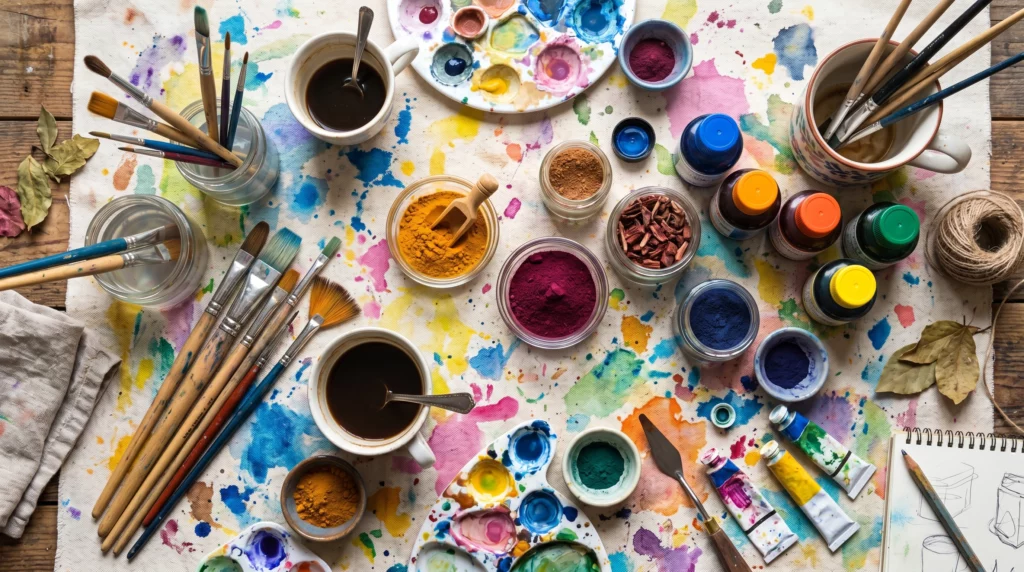
The first step is figuring out what counts as an alternative medium, and it can be anything outside the two-dimensional art aisle at the craft store. Think natural pigments, coffee, inks, pastels, fabric dyes, spray paint, tea, turmeric, beet juice, and charcoal. Some people use mixed media by combining several of these for unique effects. The creativity you can bring to your art is pretty much endless once you start experimenting with these materials.
Popular Alternative Painting Media:
- Coffee or Tea– Staining paper or canvas with coffee or tea gives a soft, vintage feel. It’s super affordable and simple to experiment with.
- Alcohol Inks – Known for their vibrant colors and dramatic flow. Alcohol inks work well on nonporous surfaces such as glass, tile, or glossy photo paper.
- Natural Pigments – Pigments from plants, spices, soil, charcoal, or even fruit juice offer earthy tones and subtle variations.
- Spray Paint – Great for bold, abstract work or stenciling. Using spray paint outside or in a ventilated area is important for safety.
- Chalk and Pastels – Have fun with blending and layering these colors. They work well on paper, cardboard, or even sidewalks.
- Fabric Dye or Bleach – Painting with dye on fabric or removing color with bleach creates all sorts of patterns and effects.
Some artists branch out even further by mixing media, adding found objects, or painting on surfaces such as rocks, leaves, or reclaimed wood. Many of these methods are eco-friendly, especially when using natural or recycled materials, making your art not only creative but also gentle on the environment. Exploring these options can deepen your connection to sustainable art practices.
Step 2: Gather Your Basic Supplies
Most alternative media require only a few basic tools. Chances are, you don’t need a trip to a specialty art store. Everyday items come right from your backyard and kitchen, supporting your creative adventure.
Tools You’ll Want to Have Handy:
- A set of budget-friendly brushes in different sizes (old brushes work too). Sticks from branches also work well.
- Protective covering for your work area (like newspapers or drop cloths).
- Mixing containers and stir sticks (think old jars or yogurt cups).
- Paper towels, rags, or sponges for blotting and cleaning up.
- Gloves, a paint shirt, and an apron for messier materials like dye or spray paint.
Surfaces to Experiment On:
- Watercolor or mixed media paper can handle most liquid paints and stains.
- Canvas panels, wood scraps, or even cardboard work great for bolder mediums.
- Glass, ceramic tiles, or metal sheets let you play with alcohol inks or spray paint effects.
Raid your recycling bin before buying anything. You’ll be surprised how versatile household surfaces can be for experimenting, and you might stumble upon some real treasures for your next project.
Step 3: Explore Basic Techniques
Each alternative medium brings its own quirks and possibilities. Start simple, then experiment as you get comfortable. Always follow safety guidelines, test materials on scrap paper, and work in well-ventilated areas. Understanding how each medium acts helps you create stunning, safe art and keeps your creative journey enjoyable.
Tips for Painting with Unusual Media:
- Try layering. Many alternative media are transparent or semi-opaque. Applying several thin washes, letting each dry between layers, leads to cool textures and depth. If colors don’t flow as you expected, then experiment with different drying times or surface preparations to troubleshoot and achieve your desired effect.
- Test before committing. Scrap paper is great for seeing how a pigment or stain behaves before painting your main piece.
- Mix and match. Combine traditional and alternative materials. For example, outline a drawing with a pen, then fill it in with coffee or tea washes or pastels.
- Embrace imperfection. These art materials can be unpredictable. Letting go of the pursuit of perfect results often leads to unexpected discoveries.
Sample Projects to Try:
- Paint a portrait using only coffee and tea for dreamy sepia tones.
- Dip leaves or flowers in natural pigment, then press them onto paper for botanical prints.
- Layer alcohol ink on glossy tile, then tilt to let the colors swirl and flow.
- Blend sidewalk chalk on textured canvas for abstract, Impressionist-style art.
Journal and date your process by snapping photos as you go. Flipping back through progress shots might spark more ideas for future projects. Keeping a casual record can also help you spot what really works for you.
Step 4: Avoid Common Pitfalls and Stay Safe
Alternative media can get messy and, sometimes, even a bit hazardous. A few basic precautions help keep things safe and fun. Staying sharp while trying new tools or substances is important for both your safety and the outcome of your art.
Simple Safety Reminders:
- Always work in a well-ventilated area, especially when using alcohol ink or spray paint.
- Wear gloves when handling dyes, bleach, or anything that could stain your skin.
- Keep food-based pigments (like coffee, tea, beet juice, or turmeric) away from pets or small children.
- Label your containers clearly so you don’t mix up drinks with art supplies.
Checking up on safety information for any new material is always smart. For example, some household cleaners used in mixed media art can react with other chemicals, so taking a minute to confirm is worth it. Don’t hesitate to ask professionals at your local craft store if you’re uncertain about the material.
Step 5: Push Boundaries and Make It Your Own. Don’t be afraid to try unconventional ideas or combine different materials. Personalizing your art with mixed media can make your work truly unique and fulfilling. Embrace the process of discovery and let your curiosity guide you to new creative horizons.
Once you get the hang of one alternative medium, try combining several for a mixed-media masterpiece. Use fabric glue, collage, or recycled objects in your work. I love saving bits of packaging, pressed flowers, or scraps of fabric to layer into my pieces. Saving art “scraps” by cutting them up and collaging them into new work can also breathe new life into old ideas.
Ideas to Keep Experimenting:
- Add doodles or linework over dried stains for extra contrast.
- Use stencils or painter’s tape to block out shapes when spray painting or dyeing.
- Mix natural pigment with clear glue or acrylic medium for thicker textures.
- Start a group challenge with friends. Everyone paints the same scene using different nontraditional materials.
Sharing your work with other artists by joining local art meetups can help you learn by seeing how they use these techniques. The alternative media art community is really welcoming, and you can find lots of tips by searching Instagram or Pinterest. You might even find opportunities to collaborate with local artists or organizations interested in unique materials.
Common Questions & Quick Troubleshooting
What if my materials bleed, fade, or smear?
Sealing your finished piece with a fixative spray (for pastels and chalk) or a clear acrylic sealer (for ink or natural pigment) helps preserve colors. Testing fixatives on a scrap piece first is always wise, since some sprays darken delicate stains like tea. You might have to try out a few sealers to see which one gives your finished work the look you want.
How do I prevent paper from warping when using liquid mediums?
- Thicker paper, such as watercolor or mixed-media paper, handles wet materials better than thin printer paper.
- Taping paper edges down creates tension while the paint dries, reducing wrinkles.
- If the paper buckles, flatten it by pressing it under heavy books once it’s dry.
Can I mix alternative mediums with my regular acrylics or watercolors?
Yes, many alternative mediums combine well with store-bought paints. Just watch for unexpected reactions, like oil separating from water, and always test with a swatch first. Mixing things up is all about experimenting, so don’t hesitate to see what happens when you blend different supplies.
Final Thoughts & Your Next Creative Steps
Painting with alternative mediums can generate new ways of thinking, creating, and expressing yourself. You don’t need perfect supplies, a big budget, or technical training. With an open mind and a willingness to get messy, you’ll find inspiration in unexpected places. Creativity doesn’t have a strict formula, so start exploring.
Ideas for Your Next Art Session:
1. Pick a material you haven’t tried, maybe coffee, tea, chalk, charcoal, beet juice, or homemade plant dye.
2. Set up a dedicated art space, even if it’s just a table corner covered with a newspaper.
3. Share your finished work with a friend or online art group for tips and encouragement.
Alternative media are all about experimenting, embracing happy accidents, and finding your voice.
Let me know in the comments below. Have you ever tried creating art using any of these materials? Which new material are you most excited about and want to try next?

Painting With Alternative Mediums interests me quite a bit, I have been wanting to get started painting as a new hobby for a while now. I even ordered the supplies I will need to get started, now after reading your article I am even more excited about staring to paint as a new hobby.
Wow, your alternative painting mediums are brand new to me. I never imagined I could use coffee or tea as a medium. This has opened my eyes. I also have thought spray painting would be cool to learn and do, but I have been hesitant on trying this living in a small apartment.
You have provided me with so many new painting mediiums that I am able to try, what I like is many of them are very easy and afforable even for retired people on a fixed-income.
I am impressed
Jeff
Thank you, Jeff, for your uplifting comment. Painting is very relaxing. My suggestion to you is to begin your endeavor to paint abstractly with different colors on mixed media or watercolor paper. Allow your mind to wander as you are painting. Have fun and don’t try to be perfect while doing it. Once your artpiece is dry, turn it around and see what strikes you.
One afternoon, I was painting abstractly, and my friend came over to my home. She picked up my artpiece and turned it around. I was amazed when I saw a picture of a rabbit whose colors faded inside the picture.
I have painted with instant coffee as a background color on bookmarks I was doing. It came out very antiquish. Another idea, take two to four paper cups, and in each cup, put different levels of instant coffee. By doing this, you are going from dark to light colors.
I hope you have fun when you begin your journey into painting. If you ever need suggestions, do not hesitate to ask me.
All my best to you,
Heidi